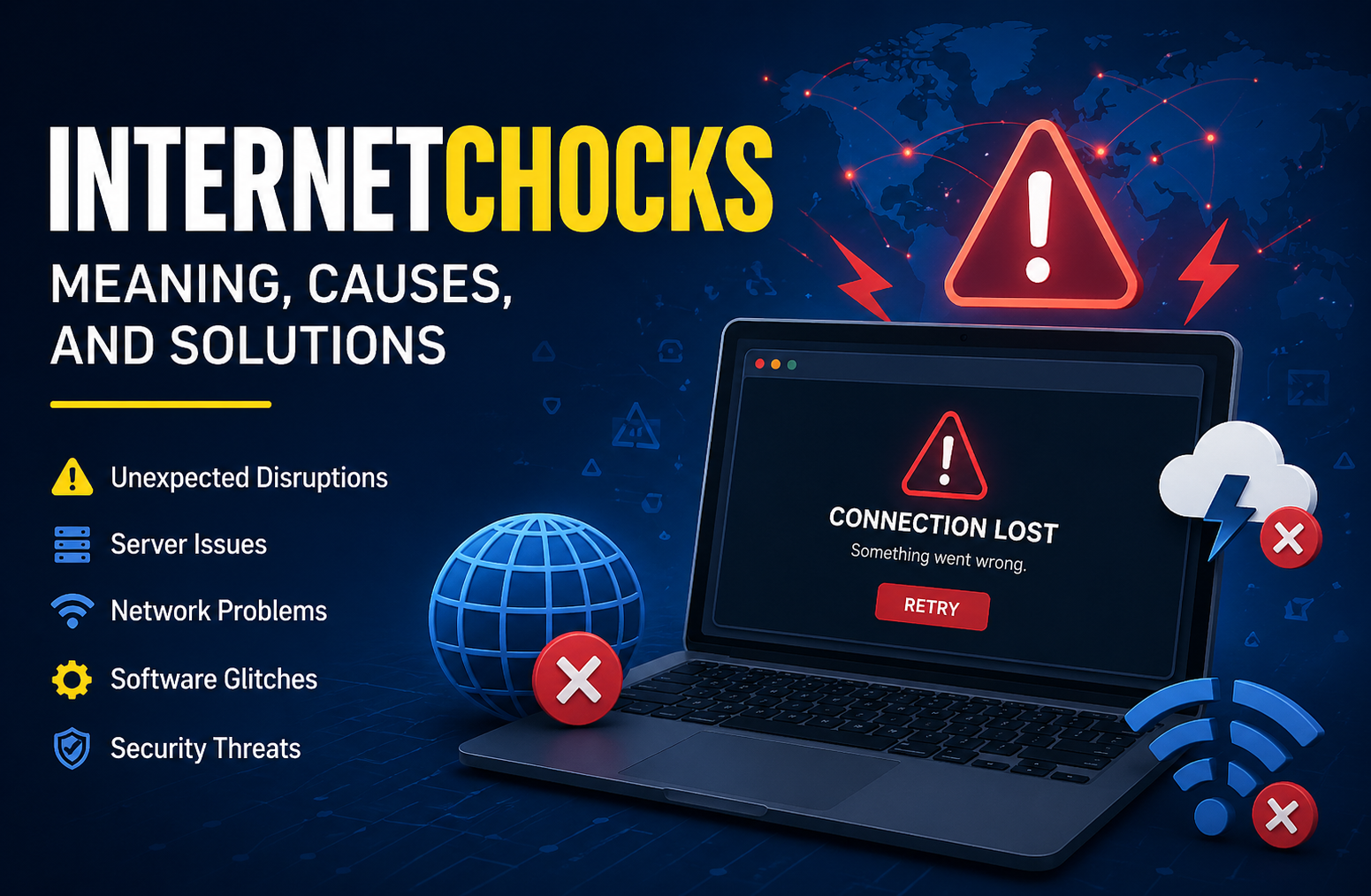
Internetchocks Guide: Meaning, Causes, and Solutions
The term internetchocks has recently gained attention among users searching for clarity about online disruptions, unexpected digital behaviors, and evolving internet-related phenomena. Whether you’ve encountered internetchocks while browsing, managing a website, or analyzing digital trends, understanding what it truly represents can help you navigate the online world more effectively.
In this in-depth guide, we will break down the concept, explore its real-world implications, and provide practical insights based on observed patterns and digital experience.
What Is Internetchocks?
At its core, internetchocks refers to unexpected interruptions, anomalies, or sudden changes that occur within internet-based systems, platforms, or user experiences. These can manifest in various forms, including:
- Sudden website downtime
- Unexplained traffic spikes or drops
- Glitches in online services
- Algorithmic shifts affecting visibility
- Network instability or latency issues
While the term itself is not yet formally standardized, it is increasingly used in informal digital discussions to describe these unpredictable online disruptions.
Why Internetchocks Matter in Today’s Digital World
The internet has become deeply integrated into daily life, business operations, and global communication. When disruptions occur, even minor ones, they can have significant consequences.
Key Reasons It Matters
- User Experience Impact
A slow or broken website can drive users away within seconds. - Business Losses
E-commerce platforms can lose revenue during outages. - SEO and Rankings
Search engines may downgrade sites experiencing frequent instability. - Data Integrity Risks
Unexpected interruptions can corrupt data or interrupt transactions.
From my own observations working with websites and digital systems, even a few seconds of unexplained downtime can create confusion, especially when no clear error message is shown. This ambiguity is what often defines internetchocks.
Common Causes of Internetchocks
Understanding the root causes is essential for prevention and management. Internetchocks are rarely random; they usually stem from underlying technical or systemic issues.
1. Server Overload
When too many users access a system simultaneously, servers may struggle to respond.
- High traffic during promotions
- Viral content spikes
- Insufficient hosting capacity
2. Network Instability
Internet infrastructure itself can cause disruptions.
- ISP outages
- Routing failures
- Packet loss
3. Software Bugs
Code-related issues are a frequent cause.
- Unpatched vulnerabilities
- Conflicting scripts
- Faulty updates
4. Algorithm Changes
Search engines and platforms regularly update their algorithms.
- Ranking fluctuations
- Visibility drops
- Traffic inconsistencies
5. Cybersecurity Threats
Malicious activities can trigger disruptions.
- DDoS attacks
- Malware infections
- Unauthorized access attempts
Types of Internetchocks You Might Encounter
Internetchocks can vary widely depending on context. Recognizing the type helps in diagnosing the issue.
Temporary Glitches
Short-lived issues that resolve automatically.
- Page not loading briefly
- Minor UI bugs
Persistent Disruptions
Longer issues requiring intervention.
- Extended downtime
- Broken functionality
Performance Degradation
Gradual decline in speed or responsiveness.
- Slow loading times
- Delayed server responses
Data-Related Issues
Problems affecting information accuracy.
- Missing data
- Incorrect outputs
Real-World Applications and Examples
Internetchocks are not just theoretical; they appear across industries and use cases.
E-Commerce Platforms
During major sales events:
- Traffic spikes overwhelm servers
- Checkout systems fail
- Payment gateways lag
Content Websites
Publishers may experience:
- Sudden ranking drops
- Traffic inconsistencies
- Indexing delays
SaaS Platforms
Software services may face:
- API failures
- Integration breakdowns
- Feature malfunctions
Personal Use
Even everyday users encounter internetchocks:
- Streaming interruptions
- App crashes
- Connectivity issues
How Internetchocks Affect SEO and Online Visibility
Search engines prioritize stability and user experience. When internetchocks occur frequently, they can indirectly impact rankings.
Key SEO Impacts
- Increased bounce rates
- Lower page experience scores
- Reduced crawl efficiency
- Indexing inconsistencies
From practical experience, websites with recurring instability often struggle to maintain consistent rankings, even if their content quality is high.
How to Identify Internetchocks
Early detection is critical. Here are practical ways to identify issues:
Monitoring Tools
Use analytics and monitoring platforms to track:
- Uptime
- Response times
- Error rates
User Feedback
Users often notice problems first.
- Complaints about slow loading
- Reports of broken features
Log Analysis
Server logs provide valuable insights.
- Error codes
- Traffic patterns
- Unusual activity
Preventing Internetchocks: Practical Strategies
While not all disruptions can be avoided, many can be minimized with proper planning.
1. Use Reliable Hosting
Choose scalable infrastructure that can handle traffic spikes.
2. Optimize Performance
- Compress images
- Minimize scripts
- Use caching
3. Regular Updates
Keep software and plugins updated to avoid bugs.
4. Implement Security Measures
- Firewalls
- DDoS protection
- Regular scans
5. Backup Systems
Ensure data can be restored quickly in case of failure.
Managing Internetchocks When They Occur
Even with precautions, issues can still happen. The key is effective response.
Immediate Actions
- Identify the root cause
- Inform users if necessary
- Roll back recent changes
Long-Term Solutions
- Improve infrastructure
- Conduct performance audits
- Strengthen monitoring systems
In real-world scenarios, transparent communication often reduces user frustration during disruptions.
Challenges Associated with Internetchocks
Despite best efforts, managing internetchocks comes with challenges.
Complexity
Modern systems involve multiple layers:
- Servers
- Networks
- Applications
Unpredictability
Not all issues have clear causes.
Cost
Fixing and preventing disruptions can require investment.
Skill Requirements
Technical expertise is often necessary to diagnose and resolve issues effectively.
Future Trends Related to Internetchocks
As technology evolves, the nature of internet disruptions is also changing.
Increased Automation
AI-driven monitoring systems can detect issues faster.
Edge Computing
Reduces latency and improves stability.
Improved Infrastructure
Advancements in cloud technology enhance reliability.
Greater User Expectations
Users now expect near-perfect performance.
Best Practices for Handling Internetchocks
To stay ahead, adopt these best practices:
- Monitor systems continuously
- Test updates before deployment
- Maintain clear documentation
- Train teams for rapid response
- Analyze past incidents for learning
FAQs About Internetchocks
What does internetchocks mean?
Internetchocks refers to unexpected disruptions or irregularities in internet systems, such as downtime, glitches, or performance issues.
Are internetchocks avoidable?
Not entirely, but their frequency and impact can be reduced through proper infrastructure, monitoring, and maintenance.
How do internetchocks affect users?
They can cause slow loading, broken features, or inability to access services, leading to frustration.
Can internetchocks impact SEO?
Yes, frequent disruptions can negatively affect user experience metrics and search engine rankings.
What is the most common cause of internetchocks?
Server overload and software bugs are among the most common causes.
How can businesses prepare for internetchocks?
By investing in scalable hosting, monitoring tools, and security measures, businesses can better manage potential disruptions.
Conclusion
Internetchocks represent a growing reality in the digital ecosystem. As reliance on online systems increases, so does the importance of understanding and managing these disruptions. By recognizing their causes, impacts, and solutions, individuals and businesses can reduce risks and maintain a more stable online presence.