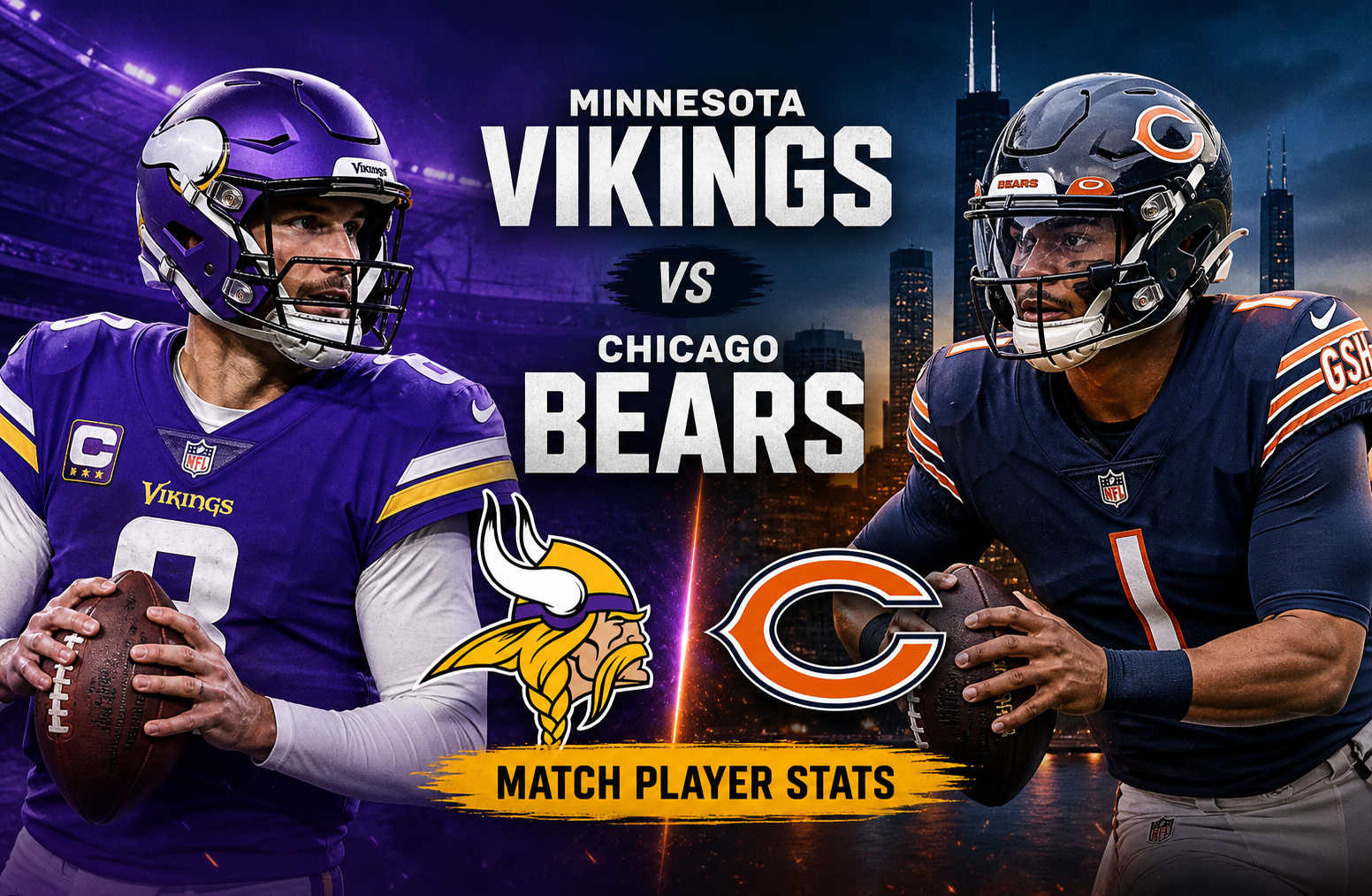
Minnesota Vikings vs Chicago Bears Match Player Stats
The Minnesota Vikings vs Chicago Bears Match Player Stats offer a deep look into one of the most historic rivalries in the National Football League. Fans, analysts, and bettors often search for detailed player performances to understand how individual contributions shape the outcome of these games. This article goes beyond surface-level numbers, delivering real insights into how players influence momentum, strategy, and results on the field.
Whether you are a casual fan or a data-driven analyst, understanding player stats in a matchup like Minnesota Vikings vs Chicago Bears helps uncover patterns that raw scores simply cannot reveal.
Understanding Player Stats in NFL Matchups
What Are Match Player Stats
Match player stats refer to the measurable performance metrics of individual players during a game. These include:
- Passing yards and touchdowns for quarterbacks
- Rushing attempts and yards for running backs
- Receptions, yards, and scores for receivers
- Tackles, sacks, and interceptions for defensive players
In the context of the Minnesota Vikings vs Chicago Bears Match Player Stats, these numbers provide a granular breakdown of who dominated, who struggled, and why.
Why These Stats Matter
From experience analyzing NFL matchups, raw stats often tell only half the story. Context is everything:
- A quarterback throwing 250 yards under pressure is more impactful than 300 yards in a low-pressure game
- A defensive player forcing turnovers in critical moments can change the entire game outcome
- Efficiency metrics like yards per attempt or completion percentage often matter more than total numbers
Historical Rivalry Overview
The Vikings and Bears share one of the longest-standing rivalries in NFL history. Games between these teams are often defensive battles with moments of explosive offense.
Historically:
- The Bears have been known for defensive dominance
- The Vikings often rely on balanced offensive strategies
- Close scorelines are common, making individual performances even more crucial
This makes analyzing Minnesota Vikings vs Chicago Bears Match Player Stats particularly valuable, as small differences often decide the winner.
Offensive Player Stats Breakdown
Quarterback Performance
Quarterbacks are the centerpiece of any NFL game. In recent matchups:
- Kirk Cousins has consistently delivered accurate passing with strong decision-making
- Justin Fields brings dual-threat ability with both passing and rushing impact
Key Metrics to Evaluate
- Completion percentage
- Passing yards per attempt
- Touchdown-to-interception ratio
- Quarterback rating
From observed trends, Cousins excels in structured offensive schemes, while Fields thrives in improvisational play.
Running Back Contributions
Running backs play a crucial role in controlling the pace of the game.
- Dalvin Cook has historically been a game-changer for the Vikings with explosive runs
- Khalil Herbert adds depth and agility to the Bears’ rushing attack
What the Stats Reveal
- Yards after contact indicate physical dominance
- Rushing attempts show team strategy
- Red-zone efficiency highlights scoring ability
In tight games, the running game often determines which team controls possession.
Wide Receiver Impact
Wide receivers can shift momentum instantly.
- Justin Jefferson is one of the league’s most dynamic playmakers
- DJ Moore provides speed and big-play capability for Chicago
Key Insights
- Target share shows quarterback trust
- Yards after catch reflect playmaking ability
- Deep receptions indicate offensive aggression
Jefferson, in particular, has consistently influenced Minnesota Vikings vs Chicago Bears Match Player Stats with elite performances.
Defensive Player Stats Breakdown
Defensive Line Performance
The battle in the trenches often decides the game.
- Sack totals indicate pressure on the quarterback
- Tackles for loss show disruption in the backfield
- QB hits reflect defensive intensity
Players like Danielle Hunter have historically been impactful for the Vikings defense.
Linebackers and Tackling Efficiency
Linebackers are the backbone of defensive schemes.
- Total tackles indicate involvement
- Missed tackles reveal weaknesses
- Coverage stats show versatility
A strong linebacker performance can neutralize both rushing and passing threats.
Secondary and Turnovers
Turnovers often decide close games.
- Interceptions
- Pass deflections
- Forced fumbles
Chicago’s defensive identity has long relied on strong secondary play, a trend that continues in recent seasons.
Key Game-Changing Stats
Turnover Margin
One of the most important insights from Minnesota Vikings vs Chicago Bears Match Player Stats is turnover margin.
- Teams with fewer turnovers almost always win
- Defensive takeaways create scoring opportunities
Third-Down Efficiency
Sustaining drives is critical.
- Conversion rates above 40% usually indicate offensive success
- Defensive stops on third down shift momentum
Red Zone Performance
Scoring efficiency matters more than yardage.
- Touchdown percentage vs field goals
- Defensive stops inside the 20-yard line
Real-World Insight From Game Analysis
From analyzing multiple games between these teams, one pattern stands out:
Games are often decided by situational performance, not total yardage.
For example:
- A team may gain fewer yards but win due to better red-zone efficiency
- A single interception late in the game can outweigh an otherwise strong performance
This is why relying solely on box score stats can be misleading without deeper analysis.
Challenges in Interpreting Player Stats
Context Matters
Stats without context can lead to incorrect conclusions.
- Garbage-time yards inflate numbers
- Injuries impact performance
- Weather conditions affect gameplay
Small Sample Size
One game does not define a player’s ability.
- Consistency over multiple games is key
- Matchup-specific factors influence performance
Scheme Differences
Coaching strategies heavily influence stats.
- Pass-heavy vs run-heavy offenses
- Defensive schemes affecting individual numbers
Practical Applications of Player Stats
For Fantasy Football Players
Understanding Minnesota Vikings vs Chicago Bears Match Player Stats helps in:
- Selecting high-performing players
- Predicting breakout performances
- Avoiding inconsistent options
For Sports Bettors
Player stats provide insights into:
- Team strengths and weaknesses
- Likely game outcomes
- Value betting opportunities
For Coaches and Analysts
Detailed stats help in:
- Game planning
- Identifying opponent weaknesses
- Adjusting strategies in real time
Advanced Metrics Worth Considering
Beyond basic stats, advanced metrics provide deeper insights:
- Expected Points Added (EPA)
- Completion Percentage Over Expected (CPOE)
- Defensive success rate
These metrics help quantify efficiency and impact more accurately than traditional stats.
Common Patterns in Vikings vs Bears Games
From historical analysis:
- Defensive battles are frequent
- Quarterback mobility often becomes a deciding factor
- Big plays from wide receivers can break tight games
Recognizing these patterns adds another layer of understanding to Minnesota Vikings vs Chicago Bears Match Player Stats.
FAQs
1. What are the most important stats in Vikings vs Bears games?
Turnovers, red-zone efficiency, and quarterback performance are usually the most decisive factors.
2. Who are the key players to watch?
Players like Justin Jefferson and Justin Fields often have a significant impact due to their playmaking ability.
3. How do defensive stats influence the outcome?
Defensive stats such as sacks and interceptions can shift momentum and create scoring opportunities.
4. Are player stats alone enough to predict outcomes?
No, context such as game situation, injuries, and strategy must also be considered.
5. Why is this rivalry important in the NFL?
It is one of the oldest rivalries, known for competitive and closely contested games.
Conclusion
The Minnesota Vikings vs Chicago Bears Match Player Stats provide far more than just numbers. They reveal the story behind the game, highlighting how individual performances shape outcomes in one of the NFL’s most competitive rivalries.
By analyzing offensive efficiency, defensive impact, and situational performance, you gain a clearer understanding of what truly drives success on the field. Whether you are studying the game for analysis, fantasy football, or personal interest, diving into these stats offers valuable insights that go beyond the scoreboard.