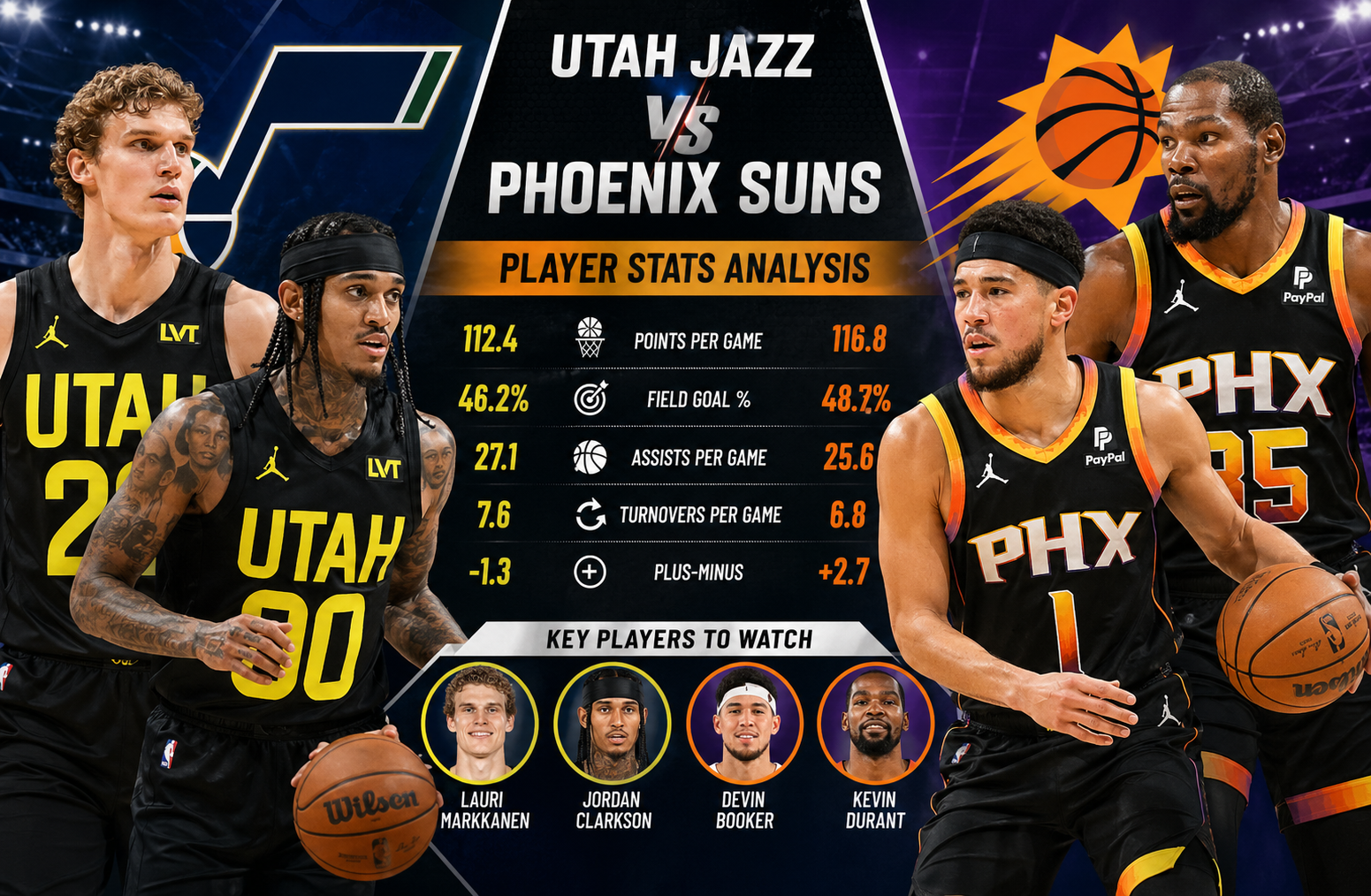
Utah Jazz vs Phoenix Suns Match Player Stats
The matchup between the Utah Jazz and the Phoenix Suns consistently delivers a blend of tactical basketball, star power, and statistical intrigue. For fans, analysts, and bettors alike, understanding player stats in this matchup goes far beyond box score numbers. It reveals patterns, strengths, weaknesses, and how individual performances shape the outcome of games.
This article takes a deep, experience-driven look at player statistics from Jazz vs Suns matchups. Instead of repeating surface-level data, it explores how and why certain players perform the way they do, what trends matter most, and how you can interpret these stats like an expert.
Understanding Player Stats in Jazz vs Suns Games
When analyzing this matchup, it’s important to go beyond basic stats like points and rebounds. In real-world basketball analysis, especially when reviewing games involving teams like Utah and Phoenix, context matters just as much as raw numbers.
Key Metrics That Actually Matter
From years of observing NBA games, certain stats consistently provide more insight:
- Usage Rate
Indicates how heavily a player is involved in offensive plays - True Shooting Percentage (TS%)
A more accurate scoring efficiency metric than field goal percentage - Assist-to-Turnover Ratio
Crucial when evaluating guards - Defensive Rating
Shows how effective a player is defensively - Plus-Minus (+/-)
Reflects team performance when a player is on the court
These metrics help uncover deeper truths behind performances in Jazz vs Suns games.
Core Player Matchups That Define the Game
Devin Booker vs Jazz Perimeter Defense
Devin Booker is often the focal point of Phoenix’s offense. In multiple matchups against Utah, his scoring output tends to fluctuate based on defensive pressure.
Key Observations:
- Booker performs best when Utah fails to contain pick-and-roll actions
- His mid-range efficiency often increases against slower defenders
- Turnovers rise when double-teamed aggressively
From experience watching these games, one pattern is clear: if Booker crosses 30 points efficiently, Phoenix usually controls the pace.
Kevin Durant Impact on Offensive Efficiency
Kevin Durant adds a different dimension to the Suns. His versatility makes him difficult to guard, especially for Utah’s forwards.
Stat Trends:
- High true shooting percentage even under defensive pressure
- Consistent scoring across all quarters
- Strong rebounding contribution in smaller lineups
Durant’s presence often shifts defensive attention, opening space for other players.
Lauri Markkanen as Utah’s Offensive Anchor
Lauri Markkanen has emerged as Utah’s primary scoring option. Against Phoenix, his performance often dictates Utah’s competitiveness.
Performance Insights:
- Strong three-point shooting against Suns’ perimeter defense
- Effective off-ball movement creates scoring opportunities
- Struggles occasionally against physical defenders like Durant
Markkanen’s ability to stretch the floor forces Phoenix to adjust defensively.
Jordan Clarkson and Bench Production
Clarkson’s role is crucial in maintaining scoring when starters rest.
Stat Highlights:
- High scoring bursts in short periods
- Variable efficiency depending on shot selection
- Significant impact on momentum shifts
Bench scoring often becomes the hidden factor in close Jazz vs Suns games.
Team-Based Statistical Trends
Utah Jazz Statistical Identity
From observation and data patterns, Utah relies heavily on:
- Three-point shooting volume
- Ball movement leading to open looks
- Rebounding to create second-chance opportunities
However, inconsistencies appear in:
- Defensive rotations
- Turnover management under pressure
Phoenix Suns Statistical Identity
Phoenix, on the other hand, shows a more controlled offensive style:
- High mid-range efficiency
- Lower turnover rates
- Strong isolation scoring ability
Defensively:
- Effective perimeter containment
- Occasional vulnerability in paint defense
Real Game Scenario Analysis
To truly understand player stats, consider how they play out in real scenarios.
Scenario 1: High-Scoring Game
In games where both teams exceed 110 points:
- Booker and Durant usually combine for 50+ points
- Markkanen responds with high-volume scoring
- Assist numbers increase significantly on both sides
Scenario 2: Defensive Battle
In lower-scoring games:
- Turnovers play a major role
- Shooting percentages drop below league average
- Role players become more influential
From experience, defensive games often favor Phoenix due to their structured playstyle.
Advanced Statistical Comparison
Shooting Efficiency
- Suns generally outperform in mid-range efficiency
- Jazz rely more on three-point accuracy
Ball Movement
- Utah averages more assists per game
- Phoenix focuses on isolation plays
Defensive Metrics
- Suns typically have a better defensive rating
- Jazz show variability depending on lineup
Challenges in Interpreting Player Stats
Analyzing player stats is not always straightforward. Several factors can distort the numbers:
Pace of Play
Faster games inflate scoring stats but may reduce efficiency
Matchup-Specific Defense
Certain defenders significantly impact individual performance
Injury Impact
Absences can shift roles and stat distributions
Game Context
Garbage-time stats can mislead analysis
Being aware of these challenges helps in making accurate interpretations.
Real-World Applications of These Stats
Understanding player stats in Jazz vs Suns matchups is valuable for:
Fantasy Basketball Players
- Identifying consistent performers
- Predicting breakout games
Sports Bettors
- Evaluating player props
- Understanding matchup advantages
Basketball Enthusiasts
- Enhancing game appreciation
- Recognizing tactical decisions
For deeper statistical understanding, you can explore advanced metrics from trusted sources like Basketball Reference.
Actionable Insights for Better Analysis
Based on observed patterns and statistical trends:
- Focus on efficiency, not just scoring volume
- Analyze player matchups, not just team stats
- Consider game pace before evaluating numbers
- Track consistency across multiple games
- Pay attention to defensive assignments
These steps significantly improve the accuracy of your analysis.
Frequently Asked Questions
What are the most important stats in Jazz vs Suns games?
Efficiency metrics like true shooting percentage, assist-to-turnover ratio, and plus-minus provide deeper insights than basic stats.
Who usually leads scoring in these matchups?
Players like Devin Booker and Lauri Markkanen often lead scoring, depending on game conditions.
How does Kevin Durant affect the matchup?
Durant increases offensive efficiency and creates spacing, making Phoenix’s offense more versatile.
Why do bench players matter in these games?
Bench production, especially from players like Jordan Clarkson, often determines momentum and game outcomes.
Are defensive stats important in this matchup?
Yes, defensive rating and matchup-specific defense play a crucial role, especially in close games.
Conclusion
The Utah Jazz vs Phoenix Suns matchup offers far more than just entertainment. It serves as a case study in how individual performances, team strategies, and advanced statistics come together to shape outcomes.
By focusing on meaningful metrics, understanding player roles, and considering real-game context, you can interpret these matchups with far greater clarity. Whether you are analyzing for insight, fantasy sports, or personal interest, a deeper approach to player stats always leads to better understanding.