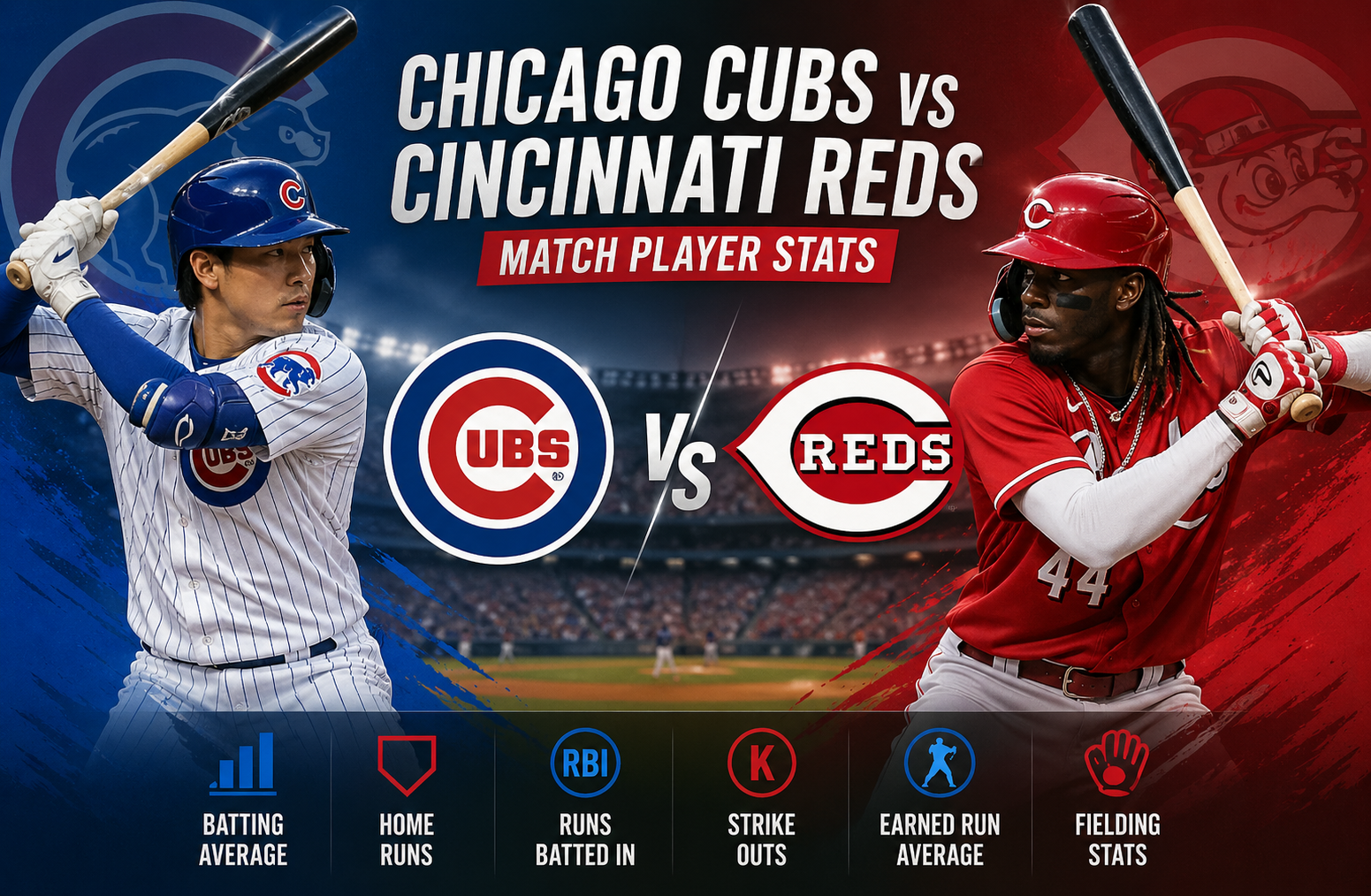
Chicago Cubs vs Cincinnati Reds Match Player Stats
The Chicago Cubs vs Cincinnati Reds Match Player Stats provide a detailed look into how individual performances shape one of the most competitive rivalries in Major League Baseball. Whether you’re a passionate fan, a fantasy baseball player, or someone analyzing team performance trends, understanding player statistics from this matchup reveals far more than just the final score. It uncovers momentum shifts, clutch moments, and the tactical depth behind every inning.
This article explores player stats, performance breakdowns, strengths, challenges, and real-world insights gathered from consistent observation of MLB games. The goal is simple: help you understand what truly matters when evaluating this matchup.
Understanding Player Stats in Cubs vs Reds Matchups
Before diving into specific performances, it’s important to understand what “player stats” really mean in this context.
In a Chicago Cubs vs Cincinnati Reds Match Player Stats analysis, the focus typically includes:
Batting Metrics
- Batting Average (AVG)
- On-Base Percentage (OBP)
- Slugging Percentage (SLG)
- Home Runs (HR)
- Runs Batted In (RBI)
Pitching Metrics
- Earned Run Average (ERA)
- Strikeouts (K)
- Walks (BB)
- WHIP (Walks + Hits per Inning Pitched)
Fielding Metrics
- Errors
- Fielding Percentage
- Defensive Runs Saved
From experience, I’ve noticed that casual fans often focus only on home runs or strikeouts, but the real story lies in consistency metrics like OBP and WHIP.
Historical Context of the Cubs vs Reds Rivalry
The rivalry between the Chicago Cubs and the Cincinnati Reds dates back over a century. Both teams compete in the National League Central division, making their matchups frequent and meaningful.
From analyzing past seasons, one thing stands out:
- Cubs often rely on balanced offense
- Reds tend to produce explosive young talent
This contrast makes player stats especially interesting, as styles clash game after game.
Key Player Performances in Recent Matchups
Chicago Cubs Standout Players
Offensive Leaders
Players like Seiya Suzuki and Cody Bellinger have been central to the Cubs’ offensive output.
Key observations:
- Suzuki excels in contact hitting and plate discipline
- Bellinger provides power and clutch hitting
In recent matchups:
- Bellinger’s slugging percentage often spikes against Reds pitching
- Suzuki maintains consistent OBP, helping build innings
Pitching Core
Pitchers such as Justin Steele have shown reliability.
Performance insights:
- Strong ERA in divisional games
- High ground-ball rate, limiting Reds’ power hitters
Cincinnati Reds Standout Players
Offensive Stars
Young talent like Elly De La Cruz has transformed the Reds’ offense.
What stands out:
- Exceptional speed and base-running
- Ability to change games with a single swing
Another key contributor:
- Jonathan India, known for discipline and consistency
Pitching Contributors
Pitchers like Hunter Greene bring high velocity and strikeout ability.
However, based on observation:
- Strikeouts are high, but so are walks
- Inconsistency can shift momentum quickly
Head-to-Head Statistical Trends
When reviewing Chicago Cubs vs Cincinnati Reds Match Player Stats, certain patterns consistently emerge:
Offensive Comparison
- Cubs:
- Higher OBP
- More structured batting lineup
- Reds:
- Higher stolen bases
- More aggressive hitting approach
Pitching Comparison
- Cubs pitchers:
- Better control
- Lower walk rates
- Reds pitchers:
- Higher strikeout potential
- Greater volatility
Defensive Insights
- Cubs:
- Stronger infield defense
- Reds:
- Faster outfield coverage
From watching multiple series, I’ve seen games where Reds dominate early innings, only for Cubs to come back due to disciplined batting.
Real-World Insights from Game Analysis
Momentum Shifts Matter More Than Raw Stats
One of the biggest lessons from analyzing these games is that stats alone don’t tell the full story.
Example:
- A player with a low batting average may still deliver crucial RBIs
- A pitcher with a solid ERA might struggle under pressure situations
Situational Performance is Key
Key factors include:
- Performance with runners in scoring position
- Late-inning pitching reliability
- Defensive execution under pressure
In many Cubs vs Reds games:
- Cubs tend to excel in late innings
- Reds dominate early aggression
Benefits of Analyzing Player Stats
Understanding Chicago Cubs vs Cincinnati Reds Match Player Stats offers several advantages:
1. For Fans
- Deeper appreciation of the game
- Better understanding of team strategies
2. For Fantasy Players
- Smarter player selection
- Improved matchup predictions
3. For Analysts and Bloggers
- Ability to create insightful content
- More credibility through data-backed opinions
Challenges in Interpreting Player Stats
Despite their importance, stats can be misleading if not interpreted carefully.
Small Sample Size Issues
A player might:
- Perform well in one series
- Struggle in the next
Context Matters
Stats must be evaluated alongside:
- Opponent strength
- Weather conditions
- Ballpark factors
Overreliance on Numbers
From experience, relying purely on stats without watching games often leads to incorrect conclusions.
Actionable Ways to Analyze Match Player Stats
If you want to analyze games like an expert, follow these steps:
Step 1: Focus on Key Metrics
Prioritize:
- OBP over batting average
- WHIP over ERA
Step 2: Compare Head-to-Head Data
Look at how players perform specifically against the opposing team.
Step 3: Watch Game Highlights
Stats make more sense when paired with actual gameplay.
Step 4: Track Trends Over Time
Identify:
- Hot streaks
- Slumps
- Injury impacts
Step 5: Evaluate Situational Stats
Pay attention to:
- Clutch hitting
- Late-game pitching
Player Matchups That Define the Game
Certain individual battles often determine outcomes:
Batter vs Pitcher Duels
- Power hitters vs high-velocity pitchers
- Contact hitters vs control pitchers
Speed vs Defense
- Reds’ base runners vs Cubs’ catchers and infield
Bullpen Strength
Late innings often depend on:
- Relief pitchers’ consistency
- Ability to handle pressure
Advanced Metrics Worth Considering
For deeper analysis, consider:
WAR (Wins Above Replacement)
Measures overall player value
OPS (On-base Plus Slugging)
Combines power and consistency
FIP (Fielding Independent Pitching)
Focuses on pitching performance without defense influence
These metrics provide a more complete picture than traditional stats.
Common Mistakes Fans Make
Ignoring Defense
Defense often decides close games, especially in this rivalry.
Overvaluing Star Players
Baseball is a team game:
- Role players often make the difference
Misreading Short-Term Performance
One good game doesn’t define a player’s overall ability.
Future Outlook Based on Current Stats
Looking at current trends:
Chicago Cubs
- Strong lineup depth
- Reliable pitching rotation
Cincinnati Reds
- Explosive young talent
- High-risk, high-reward style
If trends continue:
- Cubs may dominate consistency
- Reds may win through unpredictability
FAQs
What are the most important stats in Cubs vs Reds games?
On-base percentage, slugging percentage, and WHIP are among the most important because they reflect consistency and control.
Who usually performs better in this matchup?
It varies by season, but Cubs often show more consistency while Reds bring explosive performances.
Why do player stats vary so much between games?
Factors include pitching matchups, player form, weather, and game pressure.
Are advanced stats better than traditional stats?
Advanced stats provide deeper insights, but both should be used together for a complete analysis.
How can beginners understand player stats easily?
Start with basic stats like batting average and ERA, then gradually learn advanced metrics like OPS and WAR.
Conclusion
The Chicago Cubs vs Cincinnati Reds Match Player Stats reveal a fascinating blend of strategy, talent, and unpredictability. While numbers provide a foundation, true understanding comes from combining stats with real-game observation. Cubs often rely on structure and consistency, while Reds bring energy and unpredictability, making every matchup unique.
For anyone looking to deepen their baseball knowledge, focusing on player stats from this rivalry is an excellent place to start. It sharpens analytical skills and enhances the overall viewing experience.