49ers vs Seahawks Match Player Stats
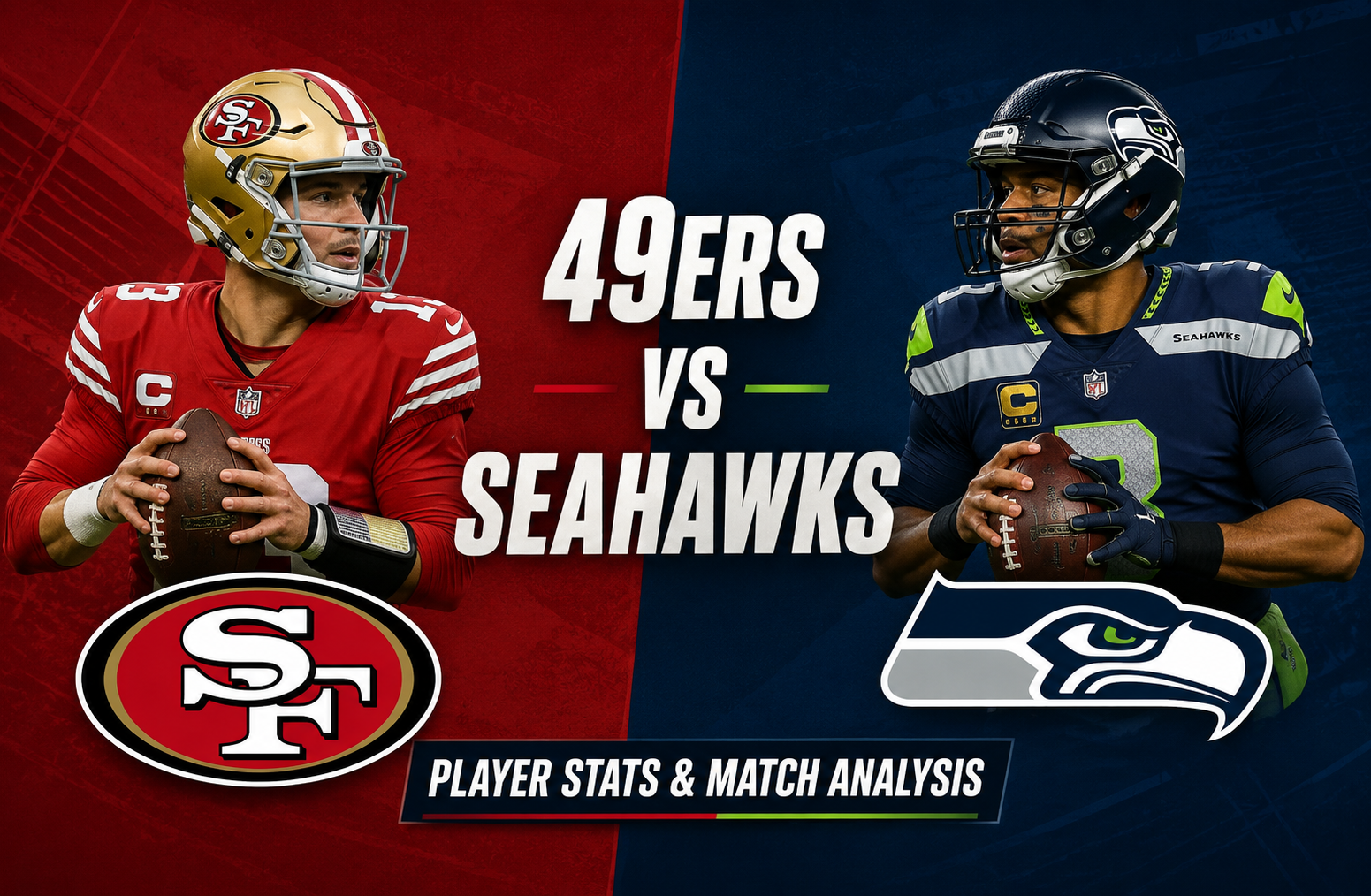
The rivalry behind the 49ers vs Seahawks Match Player Stats continues to attract NFL fans because every meeting between these two NFC West teams delivers physical football, tactical adjustments, and standout individual performances. From quarterback efficiency to defensive pressure, every stat tells part of the story. Fans no longer look only at the final score. They want to understand which player controlled momentum, who dominated key downs, and how coaching decisions shaped the outcome.
The modern NFL is driven by analytics, and games between the San Francisco 49ers and Seattle Seahawks provide some of the most interesting statistical breakdowns in football. Passing efficiency, rushing consistency, red-zone conversion, third-down defense, yards after catch, quarterback pressure rate, and turnover margins all influence the final result. When people search for detailed player statistics from this rivalry, they are usually looking for deeper football insight rather than surface-level commentary.
The matchup is also fascinating because the playing styles often contrast sharply. San Francisco usually relies on physical offensive execution, disciplined defense, and balanced play calling. Seattle often counters with explosive plays, aggressive passing sequences, and mobile quarterback movement. This clash creates statistically rich games that reward close analysis.
Understanding player statistics from these matchups helps fans evaluate team strengths, fantasy football value, coaching efficiency, and long-term season trends. Whether it is quarterback decision-making, wide receiver separation, linebacker tackling efficiency, or defensive line pressure rates, the numbers reveal far more than highlights alone.
Why This Rivalry Produces Important Player Statistics
The NFC West has historically been one of the NFL’s toughest divisions. Games between San Francisco and Seattle are rarely simple. These contests often determine playoff positioning, division rankings, and postseason momentum.
Several factors make this rivalry statistically significant:
Defensive Intensity
Both teams traditionally prioritize strong defensive systems. That means offensive stats are harder to accumulate, making standout performances more meaningful.
Physical Football Style
These matchups involve heavy contact, disciplined tackling, and strong trench battles. Running backs, linebackers, and offensive linemen often become central to the statistical story.
Tactical Coaching Battles
Coaches constantly adjust formations, coverage schemes, and tempo. Statistical swings during games often reflect these coaching decisions.
Prime Time Pressure
Many meetings happen in nationally televised slots, increasing player pressure and competitive intensity. Performance under pressure often separates elite players from average contributors.
Because of these factors, the 49ers vs Seahawks Match Player Stats usually provide valuable insight into player consistency, mental toughness, and tactical execution.
Quarterback Performance Breakdown
Quarterbacks remain the center of attention in every NFL game, and this rivalry is no different. Statistical analysis of quarterback play often explains the entire outcome.
Passing Efficiency Matters More Than Volume
A quarterback throwing for 350 yards may still perform worse than one throwing for 240 efficient yards with fewer mistakes. In recent meetings, analysts have focused heavily on:
- Completion percentage
- Yards per attempt
- Red-zone efficiency
- Interception rate
- Pressure response
- Third-down conversions
San Francisco quarterbacks typically succeed through rhythm passing, quick reads, and play-action concepts. Seattle quarterbacks often rely more on improvisation and deep passing opportunities.
Pocket Awareness and Pressure Management
One major difference-maker in these games is how quarterbacks handle defensive pressure. Seattle’s defensive front has historically attempted to disrupt timing through edge pressure, while San Francisco’s defensive scheme frequently emphasizes collapsing the pocket quickly.
Quarterbacks facing pressure generally experience:
- Lower completion percentages
- Reduced throwing accuracy
- Increased turnover risk
- More sacks
- Fewer explosive plays
When analyzing quarterback statistics, pressure-adjusted performance usually matters more than raw passing totals.
Red-Zone Decision Making
Red-zone passing efficiency often determines the winner. Teams moving the ball between the 20-yard lines still fail if they cannot finish drives.
Important quarterback red-zone metrics include:
- Touchdown percentage
- Interceptions inside the 20
- Completion rate
- Average release time
- Third-and-goal efficiency
These small statistical details frequently decide close NFC West battles.
Running Back Statistics and Offensive Balance
Running backs play a major role in this rivalry because both teams value physical football. Strong rushing performances help control time of possession and reduce defensive fatigue.
Rushing Efficiency Over Total Carries
A back averaging 5.5 yards per carry creates more offensive value than one carrying 28 times for inefficient gains. Analysts often focus on:
- Yards after contact
- Explosive runs
- Broken tackles
- Red-zone rushing touchdowns
- First-down conversion rate
San Francisco has often built its offensive identity around efficient rushing attacks and motion-heavy schemes. Seattle has historically mixed power running with outside-zone concepts to stretch defenses horizontally.
Offensive Line Contribution
Running back statistics cannot be evaluated without considering offensive line performance.
Important offensive line metrics include:
- Run-block win rate
- Adjusted line yards
- Stuff rate allowed
- Pressure prevention
- Second-level blocking efficiency
A strong offensive line allows running backs to reach linebackers before contact, increasing explosive play potential.
Time of Possession Impact
Rushing efficiency influences total game control. Teams dominating possession often:
- Limit opposing offensive opportunities
- Reduce defensive exhaustion
- Control game tempo
- Increase fourth-quarter effectiveness
The statistical connection between rushing success and victory becomes especially visible in physical divisional games.
Wide Receiver and Tight End Production
Receiving statistics reveal how offenses attack different defensive coverages.
Yards After Catch
One of the most important modern NFL metrics is yards after catch. Receivers who create extra yardage transform short completions into explosive gains.
San Francisco has frequently excelled in this area through motion concepts, crossing routes, and creative play design.
Important receiving metrics include:
- Catch percentage
- Separation rate
- Yards after catch
- Contested catch success
- Third-down conversions
- Explosive reception percentage
Deep Threat Production
Seattle has often relied on vertical passing concepts to generate momentum-changing plays. Deep-ball efficiency can instantly alter field position and scoring probability.
Key deep passing statistics include:
- Average depth of target
- Completion percentage on throws over 20 yards
- Passer rating on deep attempts
- Defensive pass interference drawn
- Explosive touchdown receptions
Tight End Influence
Tight ends are particularly valuable in physical divisional games because they contribute both as blockers and receivers.
Elite tight end statistics often include:
- Red-zone touchdowns
- Third-down catches
- Blocking grades
- Seam-route production
- Play-action effectiveness
These hybrid players create matchup problems for linebackers and safeties.
Defensive Statistics That Change Games
Defense remains one of the defining features of this rivalry.
Sack Production and Pressure Rate
Pressure disrupts offensive rhythm faster than almost any other defensive factor.
Important pass-rush statistics include:
- Total sacks
- Pressure percentage
- Quarterback hits
- Hurry rate
- Double-team win rate
A defensive line consistently generating pressure forces quicker throws and increases turnover opportunities.
Linebacker Performance
Linebackers must stop the run, cover tight ends, and react quickly to play-action concepts.
Strong linebacker metrics include:
- Total tackles
- Tackles for loss
- Coverage success rate
- Missed tackle percentage
- Blitz efficiency
In divisional games where teams know each other well, linebacker intelligence becomes extremely important.
Secondary Efficiency
Defensive backs face enormous pressure against modern passing attacks.
Critical secondary metrics include:
- Pass breakups
- Completion percentage allowed
- Interceptions
- Coverage snaps per reception
- Defensive passer rating allowed
Successful secondary play often eliminates explosive momentum swings.
Turnovers and Momentum Statistics
Turnovers consistently influence outcomes in close NFL games.
Why Turnover Margin Matters
Teams winning the turnover battle usually gain:
- Better field position
- Extra possessions
- Momentum swings
- Scoring opportunities
Important turnover-related statistics include:
- Interceptions forced
- Fumbles recovered
- Ball security rate
- Defensive touchdown production
In highly emotional rivalry games, turnovers often shift crowd energy and sideline confidence instantly.
Hidden Yardage
Football analysts frequently discuss hidden yardage generated through:
- Special teams
- Field position
- Turnover returns
- Penalty discipline
These overlooked statistics significantly affect game outcomes.
Coaching Strategy and Statistical Influence
Player stats are heavily influenced by coaching philosophy.
Offensive Play Calling
Balanced offenses generally produce more sustainable statistical output. Predictable play calling allows defenses to anticipate formations and tendencies.
Coaching analysis often examines:
- Run-pass ratio
- Motion usage
- Play-action frequency
- Fourth-down aggression
- Tempo changes
Defensive Adjustments
Elite defensive coordinators adapt quickly during games. Halftime adjustments can dramatically alter second-half statistics.
Defensive strategy metrics include:
- Blitz percentage
- Zone versus man coverage rate
- Third-down adjustment success
- Red-zone defense efficiency
These coaching decisions directly shape player performance numbers.
Advanced Analytics in Modern NFL Evaluation
Traditional box scores no longer tell the full story.
Modern football analysis increasingly relies on advanced metrics such as:
- EPA per play
- Success rate
- Expected completion percentage
- Pressure-adjusted efficiency
- Win probability added
According to NFL analytics research advanced metrics help teams evaluate efficiency beyond raw yardage totals.
Why Advanced Metrics Matter
A player may record high yardage totals while still hurting offensive efficiency through:
- Turnovers
- Low success rate
- Inefficient third-down performance
- Negative plays
Advanced statistics provide better context for evaluating true performance quality.
Key Areas Fans Analyze After Every Matchup
Football fans reviewing postgame statistics usually focus on several major areas.
Offensive Leaders
Fans examine:
- Passing yards
- Rushing touchdowns
- Receiving efficiency
- Explosive plays
Defensive Standouts
Defensive analysis typically highlights:
- Sack leaders
- Interceptions
- Tackles for loss
- Forced fumbles
Clutch Performance
Late-game performance often shapes public perception most strongly.
Important clutch metrics include:
- Fourth-quarter passer rating
- Final-drive efficiency
- Third-down conversions under pressure
- Defensive stops in final possessions
These moments define rivalry games emotionally and statistically.
Fantasy Football Impact
Fantasy football managers closely study this rivalry because player trends often reveal future value.
Players Who Gain Fantasy Value
Fantasy managers often target:
- Red-zone receivers
- Goal-line running backs
- High-target slot receivers
- Turnover-producing defenses
Matchup-Based Decision Making
Statistical trends help fantasy managers predict:
- Defensive vulnerabilities
- Target distribution
- Injury-related workload increases
- Touchdown probability
Detailed matchup analysis provides an edge during fantasy football season.
Real Football Insight Beyond Basic Numbers
Many casual fans focus only on touchdowns and passing yards. However, deeper analysis reveals more important truths.
Example of Misleading Statistics
A quarterback may throw:
- Two touchdowns
- 300 yards
Yet still struggle because:
- Most production came late in garbage time
- Third-down efficiency remained poor
- Pressure caused major offensive disruption
Context matters more than raw totals.
Film Study Versus Box Scores
Experienced analysts combine:
- Game film
- Situational statistics
- Personnel matchups
- Tactical adjustments
This creates a more accurate understanding of performance quality.
Common Challenges When Interpreting NFL Statistics
Football statistics can sometimes mislead readers without proper context.
Small Sample Size Problems
One outstanding game does not always indicate long-term player improvement.
Scheme Influence
Some offensive systems naturally inflate statistics through:
- High tempo
- Short passing volume
- Screen-heavy concepts
Garbage-Time Production
Late-game stats accumulated during non-competitive situations may exaggerate performance quality.
Understanding these limitations helps readers evaluate statistics more intelligently.
How Injuries Affect Statistical Outcomes
Injuries significantly influence player production and game flow.
Offensive Injuries
Missing offensive linemen can:
- Increase pressure rate
- Reduce rushing efficiency
- Limit deep passing
Defensive Injuries
Defensive injuries often impact:
- Coverage reliability
- Run stopping
- Rotational depth
- Fatigue management
Player availability is frequently one of the biggest hidden factors behind statistical swings.
Historical Perspective on the Rivalry
The San Francisco and Seattle rivalry became especially intense during the 2010s when both teams consistently competed for playoff positioning.
Defensive Eras
Several matchups became famous for defensive dominance rather than offensive fireworks.
Evolution of Offensive Strategy
Over time, offensive systems evolved toward:
- Faster passing concepts
- Motion-heavy formations
- Analytics-driven decisions
- Position versatility
Modern statistical analysis reflects this strategic evolution.
The Importance of Situational Football
Situational performance often matters more than total yardage.
Third-Down Efficiency
Third-down success extends drives and controls tempo.
Important metrics include:
- Conversion percentage
- Average yards to gain
- Passing efficiency under pressure
Red-Zone Defense
Strong red-zone defense forces field goals instead of touchdowns.
This dramatically changes win probability in close games.
Two-Minute Execution
Late-half possessions require:
- Clock awareness
- Sideline management
- Accurate quarterback decisions
These moments create some of the most important statistical sequences in rivalry games.
What Makes Certain Performances Memorable
Not all impressive statistics create memorable performances.
Fans usually remember games where players:
- Delivered under pressure
- Changed momentum
- Dominated physically
- Made clutch plays late
Emotional context amplifies statistical significance.
The Future of NFL Statistical Analysis
NFL analysis continues evolving rapidly.
Future evaluation trends may focus even more on:
- Tracking data
- Player movement speed
- Separation metrics
- AI-driven predictive modeling
- Real-time probability analysis
This evolution will make matchup breakdowns even more detailed and informative.
FAQs
Why are 49ers and Seahawks games statistically important?
These games are usually physical, competitive, and strategically intense. The statistics often reveal playoff-level football quality and player resilience under pressure.
Which player stats matter most in this rivalry?
Quarterback efficiency, rushing success, sack production, turnover margin, and third-down conversion rates usually influence outcomes most strongly.
Why do advanced NFL analytics matter?
Advanced metrics provide context beyond traditional box scores. They help explain efficiency, pressure response, and situational performance.
How do defensive stats influence the outcome?
Defensive pressure, interceptions, red-zone stops, and third-down defense often determine momentum and scoring opportunities.
Are rushing stats still important in modern football?
Yes. Strong rushing performance controls tempo, protects the quarterback, and improves offensive balance.
Why can raw passing yards sometimes be misleading?
Passing totals may increase during garbage time or pass-heavy situations. Efficiency and situational success usually matter more than total yards alone.
Conclusion
The 49ers vs Seahawks Match Player Stats reveal far more than a simple scoreboard outcome. Every matchup showcases tactical adjustments, physical intensity, and individual performances that shape the NFC West race. Quarterback efficiency, defensive pressure, rushing consistency, turnover margin, and situational execution all contribute to the final result.
Modern NFL fans increasingly understand that football analysis requires context. Raw yardage alone cannot explain performance quality. Advanced metrics, coaching influence, game flow, and pressure situations all matter when evaluating players. That is why detailed statistical breakdowns from this rivalry remain valuable to fans, analysts, fantasy football managers, and serious football observers.
As NFL analytics continue evolving, future breakdowns of this rivalry will become even deeper and more insightful. Whether studying offensive efficiency, defensive adaptability, or player consistency, these matchups remain among the most statistically fascinating contests in professional football.