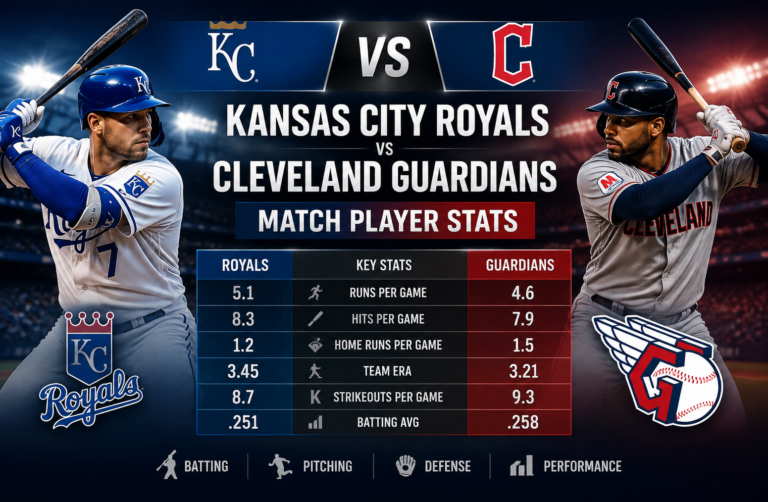
Miami Marlins vs Mets Match Player Stats
When analyzing a game between the Miami Marlins and the New York Mets, most fans focus on the final score. But the real story lives inside the player stats. These numbers reveal momentum shifts, individual brilliance, and tactical decisions that define the outcome of the game.
This guide breaks down match player stats in a way that goes beyond surface-level box scores. It explains what the numbers mean, why they matter, and how you can use them to better understand baseball performance. Whether you are a casual fan, a bettor, or someone running a sports blog, this article delivers practical, experience-driven insights.
Understanding Match Player Stats in Baseball
What Are Match Player Stats?
Match player stats refer to the individual performance metrics recorded during a specific game. These include:
- Batting stats like hits, runs, RBIs, and strikeouts
- Pitching stats like innings pitched, ERA, and strikeouts
- Fielding stats such as errors and assists
In a Marlins vs Mets matchup, these stats are not just numbers. They reflect how each player contributed to the team’s success or failure during that specific game.
Why These Stats Matter
From experience analyzing MLB games, raw stats often hide deeper insights:
- A player with fewer hits may still have the most impact if those hits were clutch
- Pitchers with moderate strikeouts may dominate through control and pitch selection
- Defensive plays rarely show in headlines but often decide tight games
Understanding these nuances helps you interpret games more accurately than just looking at the scoreboard.
Key Batting Stats to Watch
1. Hits and Batting Average
Hits are the most basic metric, but context is everything. A player going 2-for-4 might seem average, but if those hits came in scoring situations, the value increases significantly.
Batting average helps track consistency, but in a single game:
- Situational hitting matters more than volume
- Timing of hits can shift momentum
2. Runs Batted In (RBIs)
RBIs show how effective a player is at converting opportunities into runs. In Marlins vs Mets games, RBIs often highlight:
- Middle-order hitters stepping up
- Performance under pressure
3. On-Base Percentage (OBP)
This stat measures how often a player reaches base. From a practical perspective:
- High OBP players create scoring opportunities
- Even without hits, walks contribute to offensive pressure
4. Slugging Percentage
Slugging focuses on power hitting. Extra-base hits like doubles and home runs are game changers.
In many Marlins vs Mets matchups, power hitting has been a deciding factor, especially in late innings.
Pitching Stats That Define the Game
1. Earned Run Average (ERA)
ERA reflects how many runs a pitcher allows per nine innings. However, in a single match:
- A pitcher’s control and composure matter more than season ERA
- One bad inning can distort the stat
2. Strikeouts
Strikeouts are a clear indicator of dominance. But based on real-game analysis:
- High strikeouts do not always mean control
- Efficient pitching with fewer strikeouts can be equally effective
3. Walks and WHIP
WHIP stands for walks plus hits per inning pitched.
This stat reveals:
- How well a pitcher limits base runners
- Whether pressure is building against them
4. Innings Pitched
Pitching deep into the game reduces reliance on the bullpen.
In Mets vs Marlins games, starting pitchers who last longer often give their team a clear advantage.
Fielding Stats Often Overlooked
Errors
Errors can completely shift momentum. A single defensive mistake can:
- Extend innings
- Lead to unearned runs
- Change the psychological flow of the game
Defensive Assists and Putouts
While less flashy, these stats show defensive reliability. Teams that execute clean defense usually outperform in tight matchups.
Player Performance Breakdown Approach
When analyzing a specific game, I personally use a three-layer method:
Layer 1: Surface Stats
- Hits
- Runs
- Strikeouts
This gives a quick snapshot.
Layer 2: Contextual Performance
- When did the performance happen
- Was it under pressure
- Did it change the game’s direction
Layer 3: Impact Evaluation
- Did the player influence the final outcome
- Were their contributions replaceable
This method provides a clearer understanding than traditional stat reading.
Real Game Dynamics Between Marlins and Mets
Offensive Patterns
Historically, games between these teams often show:
- Inconsistent offensive bursts
- Strong pitching duels
- Late-inning scoring shifts
From observation, the Mets often rely on structured batting depth, while the Marlins lean on opportunistic hitting.
Pitching Matchups
Pitching is usually the deciding factor:
- Mets pitchers tend to focus on strikeouts
- Marlins pitchers often emphasize control and ground balls
This contrast creates interesting statistical battles.
Challenges in Interpreting Player Stats
Small Sample Size
A single game does not define a player’s ability. One standout performance can skew perception.
Context Ignorance
Stats without context can mislead:
- A player with no hits might still have contributed through walks
- A pitcher with a higher ERA might have faced tougher hitters
Over-Reliance on Traditional Metrics
Modern baseball analysis shows that advanced metrics often tell a better story than basic stats.
Advanced Stats for Deeper Insights
OPS (On-Base + Slugging)
OPS combines power and consistency into one metric.
It is one of the most reliable indicators of offensive performance.
WAR (Wins Above Replacement)
WAR estimates a player’s overall value compared to a replacement-level player.
While complex, it gives a broader view of impact.
FIP (Fielding Independent Pitching)
FIP focuses only on outcomes a pitcher can control:
- Strikeouts
- Walks
- Home runs
This removes defensive influence and gives a clearer picture of pitching quality.
How to Use These Stats Practically
For Fans
- Understand why a team won beyond the score
- Identify standout players accurately
Bloggers and Content Creators
- Create deeper, more engaging analysis
- Build authority with data-backed insights
For Bettors
- Identify patterns and trends
- Avoid decisions based only on recent results
Frequently Asked Questions
What are the most important stats in a Marlins vs Mets game?
The most important stats include RBIs, strikeouts, OBP, and innings pitched. These directly influence game outcomes.
How do pitching stats impact the final result?
Pitching controls the pace of the game. Strong pitching limits scoring opportunities and forces opponents into mistakes.
Are advanced stats better than traditional stats?
Advanced stats provide deeper insights, but both should be used together for a complete analysis.
Why do some players perform differently in specific matchups?
Matchups depend on factors like pitching style, ballpark conditions, and player psychology.
Can one player dominate the entire game?
Yes, especially pitchers. A dominant pitching performance can single-handedly control the game.
Conclusion
Analyzing Miami Marlins vs Mets match player stats is not just about numbers. It is about understanding the story behind those numbers. Every hit, strikeout, and defensive play contributes to a larger narrative that defines the game.
By focusing on context, impact, and advanced metrics, you gain a clearer and more accurate view of player performance. This approach not only improves your understanding of baseball but also helps you make smarter decisions whether you are watching, writing, or analyzing the sport.