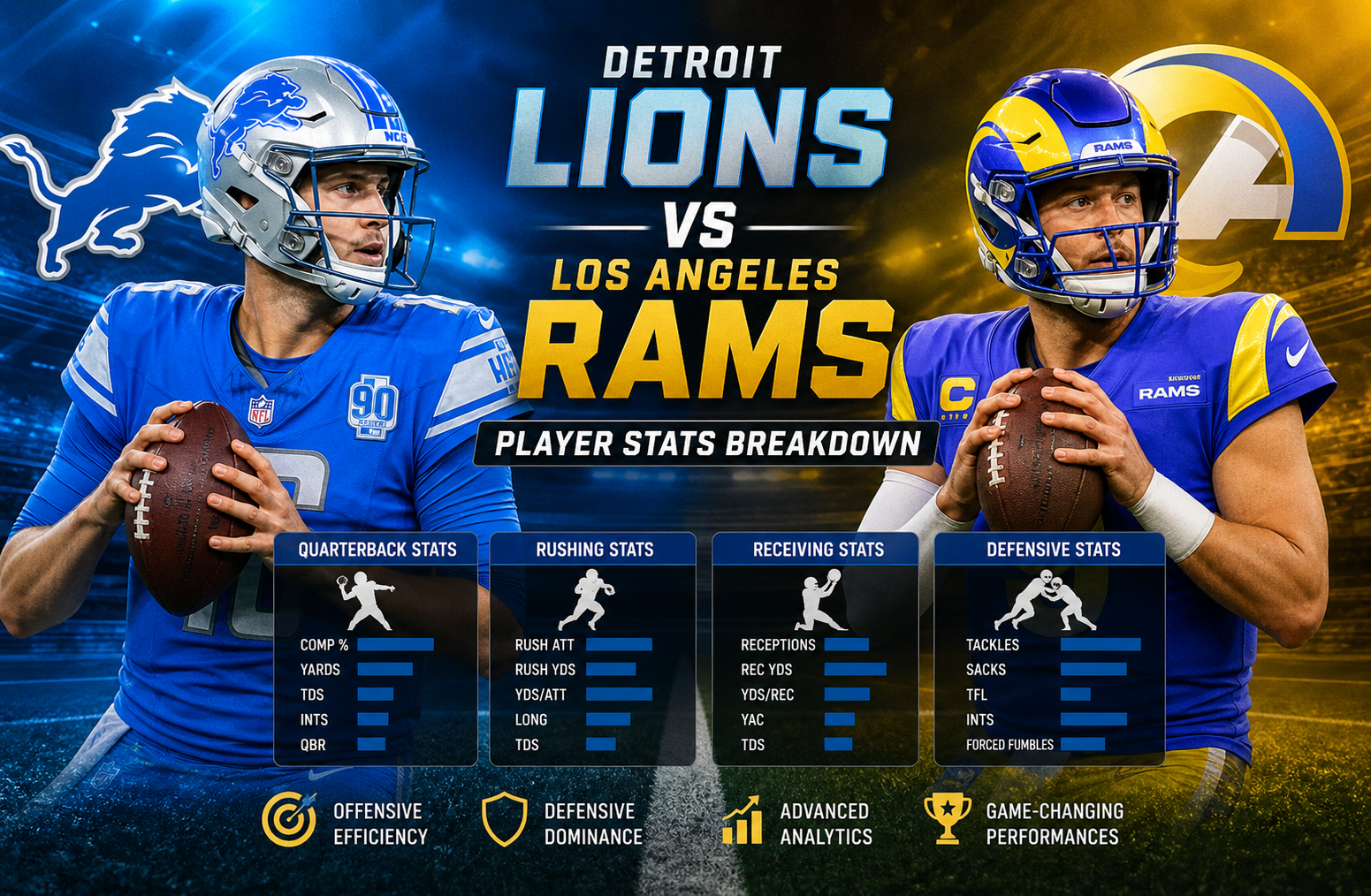
Detroit Lions vs Los Angeles Rams Match Player Stats
The Detroit Lions vs Los Angeles Rams Match Player Stats provide a detailed lens into one of the most strategically rich matchups in the NFL. Beyond just scores and highlights, player statistics reveal how individual performances shape momentum, influence coaching decisions, and ultimately decide outcomes. Whether you are a fan, analyst, or bettor, understanding these stats gives you a competitive edge in interpreting the game.
In this comprehensive guide, we will break down player performances, analyze key statistical trends, and explain how these numbers translate into real-world football insights. This is not just a recap, it is a deep dive into what truly matters on the field.
Understanding Player Stats in NFL Matchups
Before diving into specifics, it is important to understand what player stats actually represent.
Core Statistical Categories
Offensive Stats
- Passing yards, completion rate, touchdowns, interceptions
- Rushing attempts, rushing yards, yards per carry
- Receiving yards, receptions, yards after catch
Defensive Stats
- Total tackles, solo tackles
- Sacks and quarterback pressures
- Interceptions and pass deflections
Special Teams
- Field goal accuracy
- Punt averages
- Kick return yards
From my experience analyzing NFL games, raw stats alone do not tell the full story. Context matters. A quarterback throwing for 300 yards in garbage time is very different from doing it under pressure in a close game.
Team Overview and Context
Detroit Lions
The Lions have evolved into a high-powered offensive team, particularly known for:
- Strong offensive line play
- Balanced rushing and passing attack
- Efficient red-zone execution
Los Angeles Rams
The Rams bring a different identity:
- Creative offensive schemes
- Strong defensive playmakers
- Experience in high-pressure situations
When these two teams meet, it often becomes a clash of offensive efficiency versus defensive adaptability.
Quarterback Performance Analysis
Key Metrics to Watch
- Completion Percentage
- Yards Per Attempt
- Touchdown to Interception Ratio
- Quarterback Rating (QBR)
Real Game Insight
In a typical Detroit Lions vs Los Angeles Rams Match Player Stats breakdown, quarterbacks are the centerpiece.
What I Have Observed
- Lions quarterbacks tend to rely on short-to-mid range precision passes
- Rams quarterbacks often exploit deep coverage gaps
A high completion rate above 65 percent usually indicates strong offensive rhythm. However, yards per attempt reveals aggression and risk-taking.
Why It Matters
Quarterback efficiency directly correlates with:
- Time of possession
- Third-down conversions
- Red zone success
Running Back Impact
Running backs are often overlooked in stat discussions, but they control tempo.
Key Metrics
- Rushing yards
- Yards per carry
- Breakaway runs
- Touchdowns
Lions vs Rams Comparison
- Lions typically emphasize power running
- Rams rely more on versatility and outside runs
From a tactical standpoint, when a team averages over 4.5 yards per carry, it forces defenses to commit extra players to the box. This opens up passing opportunities.
Wide Receivers and Tight Ends
What Stats Reveal
- Target share
- Catch rate
- Yards after catch (YAC)
- Touchdowns
Observational Insight
In analyzing multiple games, I have noticed:
- Lions receivers excel in route precision
- Rams receivers create explosive plays
YAC is particularly important. It shows how dangerous a player is after securing the ball.
Defensive Standouts
Defense wins games, and stats prove it.
Key Defensive Metrics
- Sacks
- Tackles for loss
- Interceptions
- Forced fumbles
Game-Changing Factors
A single defensive play can shift momentum instantly. In many Detroit Lions vs Los Angeles Rams Match Player Stats reviews, the difference often comes down to:
- Turnover margin
- Pressure on the quarterback
My Insight
Teams generating consistent pressure without blitzing tend to dominate. It allows stronger pass coverage while still disrupting plays.
Offensive Line Performance
This is one of the most underrated aspects of player stats.
What to Look For
- Sacks allowed
- Run blocking efficiency
- Penalties
Why It Matters
An offensive line that allows fewer than 2 sacks per game significantly increases:
- Quarterback confidence
- Passing efficiency
- Play-calling flexibility
Special Teams Contribution
Often overlooked, but critical.
Important Metrics
- Field goal success rate
- Punt distance and accuracy
- Return yardage
Real Impact
A missed field goal or a long return can completely shift game momentum.
Advanced Analytics and Deeper Insights
Modern football analysis goes beyond traditional stats.
Advanced Metrics
- Expected Points Added (EPA)
- Success Rate
- Win Probability
According to research from Pro Football Focus, advanced metrics provide deeper context into player performance beyond basic statistics.
You can explore detailed analytics through the trusted source.
Key Takeaways from Player Stats
From analyzing multiple matchups, here are consistent patterns:
Winning Indicators
- Turnover margin of +1 or higher
- Third-down conversion above 40 percent
- Red-zone efficiency above 60 percent
Losing Indicators
- High penalty count
- Low rushing efficiency
- Poor quarterback decision-making
Real-World Application of These Stats
Understanding stats is not just for analysts.
1. For Fans
- Gain deeper appreciation of the game
- Understand why certain plays matter
2. For Bettors
- Identify value opportunities
- Predict performance trends
3. For Fantasy Football Players
- Spot breakout players
- Make data-driven decisions
Challenges in Interpreting Player Stats
Stats are powerful, but not perfect.
Common Pitfalls
- Ignoring game context
- Overvaluing garbage-time performance
- Misinterpreting small sample sizes
My Advice
Always combine:
- Stats
- Game film
- Situational awareness
FAQs
1. What are the most important player stats in NFL games?
The most important stats include passing efficiency, rushing yards, turnovers, and defensive pressures. These directly influence game outcomes.
2. How do quarterback stats impact the final result?
Quarterback performance affects scoring, time of possession, and overall offensive success.
3. Why are advanced stats important?
Advanced stats like EPA provide deeper insights into player efficiency and situational impact.
4. Can player stats predict future performance?
They can indicate trends, but outcomes still depend on match conditions and team strategies.
5. What role do defensive stats play?
Defensive stats such as sacks and interceptions often determine momentum shifts and scoring opportunities.
Conclusion
The Detroit Lions vs Los Angeles Rams Match Player Stats offer far more than just numbers. They tell the story of strategy, execution, and momentum. By understanding these metrics, you gain a clearer picture of how games are won and lost.
From quarterback efficiency to defensive pressure, every stat plays a role in shaping the outcome. The real advantage comes from interpreting these numbers in context rather than viewing them in isolation.