Washington Wizards vs Nets Player Stats
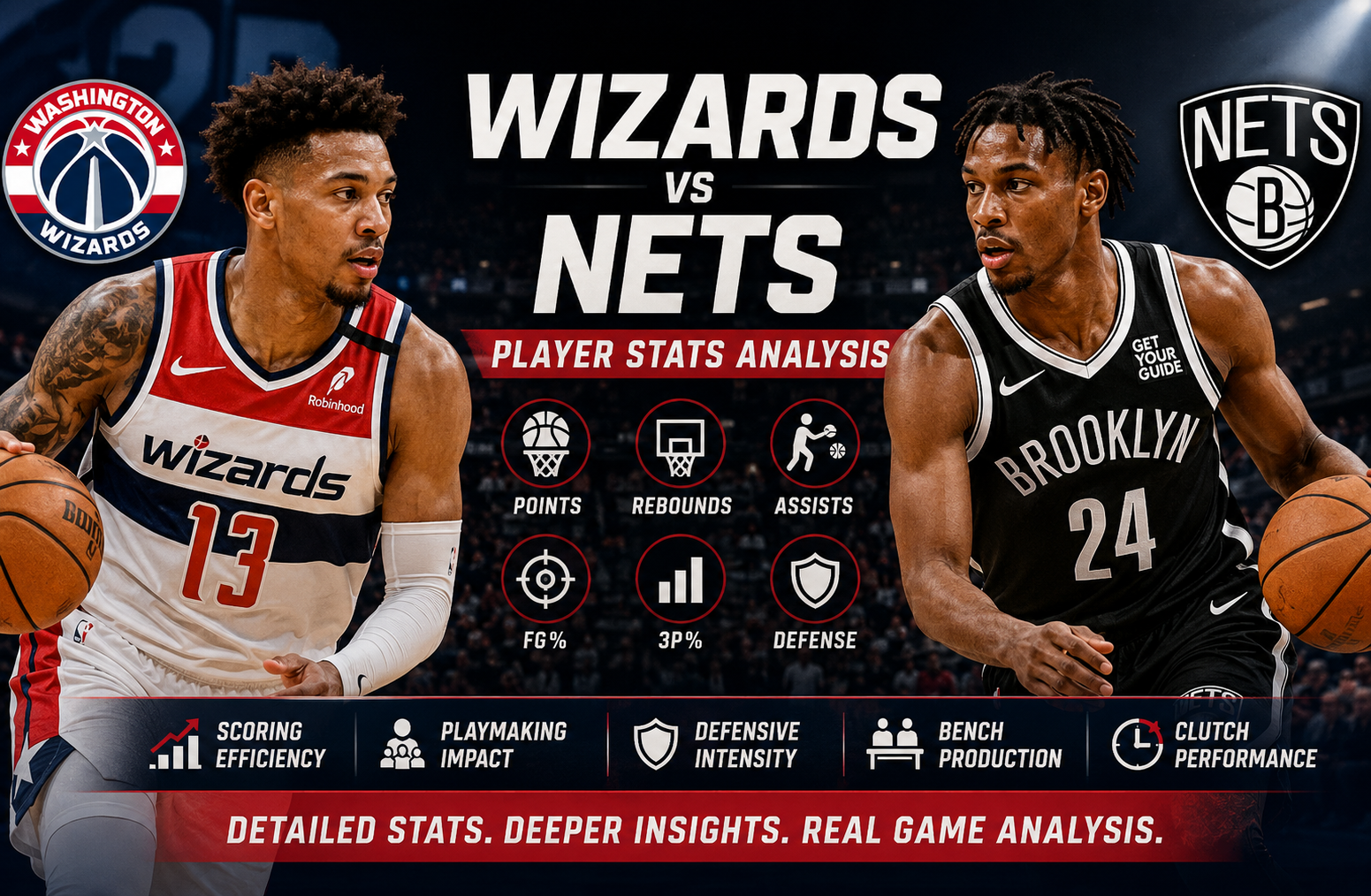
Washington Wizards vs Brooklyn Nets Match Player Stats is one of the most searched NBA topics among basketball fans because modern audiences want much more than the final score. Fans now study player efficiency, rebounding impact, defensive intensity, shooting percentages, ball movement, and clutch time execution to understand how games are truly won. Every matchup between Washington and Brooklyn creates a different storyline filled with tactical adjustments, standout performances, and momentum shifting moments.
The NBA has changed dramatically over the last decade. Basketball analysis is no longer limited to points scored. Today, serious fans examine advanced details such as shooting efficiency, transition scoring, turnover ratios, offensive spacing, and defensive rotations. These statistics reveal the real story behind a game and help explain why one team controlled the pace while the other struggled to maintain consistency.
Washington and Brooklyn have both experienced roster transitions, young talent development, and changing team identities in recent seasons. Because of this, their matchups often become unpredictable and highly competitive. Some games turn into offensive shootouts with fast pace scoring while others become defensive battles decided in the closing minutes.
This detailed guide breaks down the most important player statistics, team trends, tactical strategies, and hidden basketball insights from these Eastern Conference matchups. It is designed for fans who want a deeper understanding of how player performances shape the outcome of NBA games.
Why NBA Player Stats Matter More Than Ever
Basketball statistics are no longer just numbers displayed on television screens. They now help coaches, analysts, and fans understand efficiency, teamwork, and decision making.
In games involving Washington and Brooklyn, statistics often explain things casual viewers may miss during live action.
Important reasons player stats matter include:
- Measuring scoring efficiency instead of raw point totals
- Understanding rebounding dominance
- Evaluating defensive pressure
- Tracking ball movement and playmaking
- Identifying momentum changes
- Comparing bench production
- Analyzing clutch time execution
For example, a player scoring 30 points on poor shooting may actually hurt offensive rhythm. Meanwhile, another player recording 18 points, 10 assists, and efficient shooting could have a far greater impact on winning.
This is why detailed basketball analysis has become essential for modern NBA discussions.
Washington Wizards vs Brooklyn Nets Match Player Stats Analysis
Scoring Efficiency Breakdown
Scoring efficiency remains one of the most important areas of basketball analysis.
Modern NBA offenses prioritize:
- High percentage shots
- Three point spacing
- Fast break scoring
- Free throw generation
- Smart shot selection
When examining Washington Wizards vs Brooklyn Nets Match Player Stats, efficiency usually determines which team controls momentum.
Key scoring statistics include:
- Field goal percentage
- Three point percentage
- Free throw percentage
- Effective field goal percentage
- Transition scoring
- Points in the paint
Brooklyn often relies heavily on perimeter movement and outside shooting. Their offensive structure frequently emphasizes spacing and quick passing to create open looks.
Washington typically performs best when guards attack aggressively toward the basket and create pressure inside the paint. Fast break opportunities also play a major role in their offensive success.
One important trend in recent meetings is that the team with better shot selection usually gains a major advantage. Forced mid range shots and rushed possessions often reduce offensive consistency.
Efficient basketball almost always wins over high volume but low quality scoring.
Rebounding Battles and Possession Control
Rebounding is one of the most underrated aspects of basketball.
Many fans focus mostly on scoring totals, but rebounds often decide who controls the pace and possession flow of the game.
Important rebounding categories include:
- Total rebounds
- Offensive rebounds
- Defensive rebounds
- Team rebound percentage
- Second chance points
Washington has occasionally struggled against physical frontcourts that dominate the glass. Brooklyn, depending on lineup structure, sometimes sacrifices interior size for faster perimeter play.
This creates interesting tactical situations.
Small lineups improve spacing and transition speed, but they can become vulnerable inside the paint. Teams that secure offensive rebounds gain extra possessions and additional scoring opportunities.
Late game rebounding becomes even more valuable because one offensive board can completely shift momentum during close contests.
Strong rebounding also reflects effort, positioning, and defensive discipline.
Playmaking and Ball Movement
Assists provide a clear picture of offensive chemistry.
Teams with strong ball movement usually create:
- Better shot quality
- Improved spacing
- Open perimeter looks
- Faster offensive rhythm
- Easier scoring opportunities
Brooklyn often emphasizes passing sequences designed to stretch defenses across the floor. Washington tends to thrive when guards push transition tempo and create fast paced opportunities.
Important playmaking statistics include:
- Assists
- Turnovers
- Assist to turnover ratio
- Fast break assists
- Secondary assists
- Potential assists
Turnovers frequently decide games between these teams.
Fast paced basketball increases the importance of decision making. Careless passes often lead to transition points for the opponent.
Point guards become especially important in these situations because they control offensive rhythm and organize spacing.
A guard finishing with 12 assists and only 2 turnovers usually provides tremendous value even without massive scoring numbers.
Defensive Statistics That Change Games
Defense still wins important basketball games.
Even in today’s offense driven NBA, defensive execution remains critical during close contests.
Washington Wizards vs Brooklyn Nets Match Player Stats often reveal how defensive activity shifts momentum throughout games.
Important defensive categories include:
- Steals
- Blocks
- Forced turnovers
- Defensive rating
- Opponent shooting percentage
- Deflections
- Paint protection
Brooklyn frequently uses switching defensive systems designed to limit perimeter creation. Washington often relies on athletic defenders capable of applying pressure in transition.
Modern defenses must constantly adapt because offenses aggressively target weak defenders through isolation and pick and roll situations.
Players who can defend multiple positions become extremely valuable in these matchups.
Another major factor is closeout discipline. Teams that rotate quickly and contest outside shots effectively usually gain strong defensive advantages.
Many recent games between these franchises have changed completely because of short defensive runs involving steals, blocks, and transition finishes.
Guard Matchups and Offensive Leadership
Guard play often defines the identity of NBA games.
Dynamic guards influence nearly every aspect of offensive basketball.
Elite guards can:
- Create scoring opportunities
- Attack defensive gaps
- Generate assists
- Control tempo
- Draw fouls
- Stretch defenses with shooting
When aggressive guards establish rhythm early, defensive structures become vulnerable.
Key guard statistics include:
- Points
- Assists
- Shooting efficiency
- Usage rate
- Turnovers
- Fourth quarter scoring
Several exciting games between Washington and Brooklyn featured guards exchanging momentum changing baskets late in the fourth quarter.
Clutch guard play remains one of the biggest factors in close NBA contests.
Forward Contributions in Modern Basketball
Modern forwards must contribute in multiple ways.
Today’s NBA forwards are expected to:
- Defend different positions
- Rebound effectively
- Space the floor
- Finish near the basket
- Support offensive creation
Versatile forwards are extremely valuable because they provide lineup flexibility.
A forward producing 22 points, 8 rebounds, and strong defensive activity can completely influence game flow.
Brooklyn has often depended on forwards who can stretch defenses with outside shooting while still contributing defensively.
Washington has benefited from athletic forwards capable of attacking the rim and creating transition opportunities.
The best forwards impact games even when they are not scoring heavily.
Interior Presence and Center Performance
Despite the NBA becoming more perimeter focused, centers remain extremely important.
Interior players provide:
- Rim protection
- Rebounding stability
- Screen setting
- Paint scoring
- Defensive communication
Important center statistics include:
- Blocks
- Rebounds
- Paint points
- Pick and roll efficiency
- Defensive contest rate
In Washington and Brooklyn matchups, interior defense often determines whether teams maintain consistency during difficult stretches.
Centers capable of controlling rebounds and protecting the rim usually stabilize team defense.
Physicality inside the paint also becomes critical during close fourth quarter possessions.
Bench Production and Rotation Impact
Bench production is frequently overlooked by casual fans.
However, second unit performance often decides regular season games.
Strong bench units provide:
- Energy
- Defensive intensity
- Additional scoring
- Transition speed
- Momentum changes
Brooklyn has occasionally benefited from balanced reserve scoring while Washington has relied on energetic bench players capable of changing pace.
Important bench statistics include:
- Bench points
- Plus minus numbers
- Shooting percentages
- Reserve rebounds
- Bench defensive rating
A bench unit outscoring its opponent by double digits can completely reshape a game.
Depth becomes especially important during long NBA seasons because injuries and fatigue constantly affect lineups.
Advanced Analytics Explained
Traditional box score statistics only tell part of the story.
Advanced analytics provide deeper insight into efficiency and impact.
True Shooting Percentage
True shooting percentage measures overall scoring efficiency by including:
- Field goals
- Three pointers
- Free throws
This helps analysts determine whether scoring totals were actually efficient.
Player Efficiency Rating
Player Efficiency Rating attempts to summarize total productivity into one number.
It rewards:
- Efficient scoring
- Rebounding
- Assists
- Defensive activity
It also penalizes missed shots and turnovers.
Usage Rate
Usage rate measures how heavily a player is involved offensively.
High usage players carry major responsibility, but efficiency becomes even more important as offensive volume increases.
Plus Minus
Plus minus tracks scoring margins while players remain on the court.
Although imperfect, it helps identify lineup effectiveness and overall impact.
These advanced numbers help explain why some players contribute more positively than raw scoring totals suggest.
Tactical Strategies Used by Both Teams
Brooklyn Offensive System
Brooklyn often focuses on:
- Perimeter spacing
- Quick passing
- Three point shooting
- Pick and roll creation
- Positionless basketball
When Brooklyn shoots efficiently from outside, their offense becomes difficult to defend because opponents must constantly rotate across the perimeter.
Washington Offensive Approach
Washington typically performs best when emphasizing:
- Fast transition play
- Aggressive rim attacks
- Athletic pace
- Isolation scoring opportunities
- Young player development
Their offense often depends heavily on energy and tempo.
Defensive Adjustments
Both teams regularly experiment with:
- Zone defense
- Switching systems
- Trap coverage
- Double teams
- Small ball lineups
Halftime coaching adjustments frequently change second half momentum.
Clutch Time Performance
NBA games are often decided during the final minutes.
Clutch time statistics reveal which players perform best under pressure.
Important clutch categories include:
- Fourth quarter scoring
- Late game shooting
- Free throw efficiency
- Defensive stops
- Turnover control
Several games between Washington and Brooklyn featured dramatic endings involving difficult jump shots and critical defensive possessions.
Experienced players usually become even more valuable during these moments because decision making matters as much as athletic ability.
Fans studying player stats should always examine fourth quarter execution carefully.
Young Talent Development
One reason these games attract attention is the emergence of young talent.
Rebuilding franchises prioritize development alongside competitiveness.
Young NBA players improve through:
- Increased playing time
- Better shot selection
- Expanded offensive roles
- Defensive experience
- Improved conditioning
Analysts often track:
- Efficiency growth
- Scoring progression
- Defensive consistency
- Assist improvement
- Shooting development
Washington and Brooklyn both continue developing players capable of shaping their future identity.
How Injuries Affect Player Statistics
Injuries dramatically influence basketball performance.
When important players miss games, teams must adjust rotations and offensive structure.
Common effects include:
- Higher usage for remaining stars
- Reduced defensive consistency
- Bench players receiving larger roles
- Changes in pace
- Altered rebounding patterns
Fans analyzing statistics should always consider roster availability before evaluating trends.
Missing starters can significantly change team efficiency and tactical balance.
Coaching Influence on Statistical Outcomes
Coaching philosophy strongly affects player production.
Different systems emphasize different priorities such as:
- Ball movement
- Defensive aggression
- Three point volume
- Transition speed
- Rotational depth
An offense emphasizing quick passing usually creates higher assist totals.
Aggressive defensive systems may generate more steals but also increase foul risk.
Understanding coaching style helps explain why some players thrive statistically in specific environments.
Most Important Stats Fans Should Watch
Many fans become overwhelmed by advanced numbers.
However, several core statistics consistently reveal game quality.
The most valuable areas include:
- Shooting efficiency
- Rebounding differential
- Turnover margin
- Assist totals
- Bench production
- Defensive activity
- Transition scoring
- Clutch execution
These categories usually provide a clearer picture than raw scoring totals alone.
Efficient teams that protect the basketball generally control offensive rhythm more effectively.
Real Basketball Lessons From These Matchups
Games between Washington and Brooklyn provide valuable basketball lessons.
Efficiency Is More Important Than Volume
High scoring totals mean little without efficient shooting.
Defense Still Matters
Even in a scoring focused NBA era, defense remains essential during close games.
Ball Movement Creates Better Offense
Teams sharing the basketball usually generate higher quality scoring opportunities.
Bench Depth Is Critical
Balanced rosters handle injuries and fatigue better than top heavy teams.
Young Teams Need Consistency
Emerging teams often show exciting flashes but struggle maintaining stability over long stretches.
These lessons help explain why statistical trends continue repeating across multiple seasons.
Common Challenges in Basketball Analysis
Statistics provide valuable insight, but they also have limitations.
Common challenges include:
- Small sample sizes
- Garbage time inflation
- Pace differences
- Injury related context
- Matchup quality
A player performing efficiently against weak defenses may struggle against elite opponents.
Some contributions such as communication, positioning, and spacing are also difficult to measure statistically.
The best basketball analysis combines numbers with actual game observation.
Future Outlook for Both Teams
The future of Washington and Brooklyn remains highly interesting.
Both franchises continue balancing:
- Draft development
- Salary flexibility
- Roster building
- Young player growth
- Competitive improvement
Statistical development from young players will heavily influence long term success.
If efficiency and defensive consistency improve, both teams could become increasingly competitive within the Eastern Conference.
Fans following player statistics closely can often identify breakout stars before they become nationally recognized.
FAQs
Why are Washington Wizards vs Brooklyn Nets games popular among NBA fans?
These matchups often feature fast paced basketball, developing young players, offensive scoring runs, and competitive fourth quarter moments.
Which player stats matter most in NBA games?
The most important statistics usually include shooting efficiency, assists, rebounds, turnovers, defensive activity, and clutch performance.
Why is efficiency more important than total points?
Efficient scoring helps teams maximize possessions and maintain offensive consistency throughout games.
How do advanced analytics improve basketball understanding?
Advanced analytics provide deeper insight into player impact, lineup performance, and offensive efficiency beyond traditional box score numbers.
Why does bench production matter so much?
Strong bench units maintain energy and scoring stability when starters rest, which often influences game momentum.
Can player statistics predict future success?
Statistics can reveal development trends and efficiency growth, but context such as injuries and coaching systems must also be considered.
Conclusion
Washington Wizards vs Brooklyn Nets Match Player Stats provide much deeper insight than basic basketball numbers alone. They reveal tactical strategies, player development trends, offensive efficiency, defensive execution, and the hidden details that shape NBA outcomes.
Modern basketball analysis continues evolving because fans now want more than highlights and final scores. Rebounding battles, assist ratios, defensive pressure, transition execution, and fourth quarter composure all influence how games are won.
The matchup between Washington and Brooklyn remains compelling because both franchises continue building new identities while developing emerging talent. Every game creates fresh statistical insights and strategic lessons for basketball fans.
Careful analysis of player statistics allows NBA followers to appreciate the sport on a much deeper level. Instead of viewing basketball only through entertainment, fans can recognize the tactical intelligence and efficiency battles that shape every possession.